
Find Out Who Owns a Paulding County Property
Pin down the parcel first. Do not lean on a postal label. Open the county's Property Records and Taxes gateway, search the situs address in qPublic, and save the GPIN or account number, the legal description, and the name on the assessment roll. That roll is a discovery record. Built for appraisal and taxation, its owner field can trail a recent closing.
- Match the address to one qPublic parcel and copy its GPIN/account and legal description.
- Read the owner name and mailing address as the assessor currently carries them.
- Search that name in the Clerk/GSCCCA deed index and locate the newest deed for the same tract.
- Compare grantee, recording date, deed reference, and legal description before drawing a conclusion.
Entity names need a second check. The Georgia business search shows that entity's public filing. An officer or registered agent is not automatically the owner; the deed should vest title in the entity itself.
Identify the Paulding County Tax Parcel First
A city or ZIP label does not settle the county. Braswell is the tricky case. It spans Paulding and Polk counties. The same address can fall on either side of the line. Open the Paulding GoMaps viewer to confirm the polygon, GPIN, tax district, address, and subdivision. Do this before relying on Paulding records.
A parcel on the Polk side needs Polk sources. GIS also resolves rural tracts with no neat subdivision address. The legal description may cite a land lot, district, acreage, plat, or adjoining tract. Carry those identifiers into the assessor and deed searches. Don't force a modern street label onto an older description.
Note: Dallas handles its own addressing questions, while Paulding County Addressing assigns most other commercial and residential addresses.
Read Paulding County Owner and Address Fields Apart
The public tax card pairs ownership with appraisal data. Field names follow the live qPublic display. Read each label exactly as shown, and capture these record elements together:
| Record element | How it helps identify the owner |
|---|---|
| Owner name | The person or entity carried on the assessment roll. |
| Mailing address | Where assessment mail goes; it may differ from the property. |
| Situs address | The physical location used to find the parcel. |
| GPIN/account | The stable key for matching GIS, appraisal, and tax records. |
| Deed reference or last sale | A lead for the Clerk index, not a substitute for the instrument. |
Trace the Paulding County Owner Name to a Deed
The deed is the finish line. The Clerk of Superior Court Real Estate Division records, indexes, and reproduces deeds and related land instruments. Paulding points users to GSCCCA for deed records from January 1, 1995 forward. Search the assessor name as grantee. Then compare book and page or instrument number, recording date, location, and legal description.
Timing matters after a sale. A deed recorded after January 1 can be newer than the digest owner, because Paulding's assessor audit says ownership changes after the statutory valuation date are not simply transferred into current tax records. The county publishes no fixed lag-day count. The newest matching deed therefore carries special weight.
Decode Paulding County LLC, Trust, and Estate Ownership
Owners do not always appear under personal names. A tax card may list a company, trustee, estate, executor, or administrator. Paulding's recorder expressly handles Administrator's and Executor's deeds alongside quitclaim, security, and warranty deeds. Preserve the indexed wording, capacity terms included. Then read the instrument itself.
Georgia's entity search corroborates a company's legal name, control number, status, officers, and registered agent. Probate Court files may explain an estate's authority, while the recorded fiduciary deed shows the conveyance. Neither source settles who occupies the property.
Watch New Paulding County Filings With Georgia FANS
Georgia's Filing Activity Notification System offers a free watch. A subscriber sets alerts for real-estate filing activity. Alerts can flag a filing tied to a chosen name or property reference, which helps once ownership is confirmed. The service guarantees nothing about fraud, coverage, or title.
Treat a notification as a prompt. Pull the Clerk record and compare the instrument, parties, legal description, and recording information. Where legal rights are in doubt, a licensed Georgia attorney or qualified title professional should review the chain.
Compare Paulding County Property Owner Sources
No single screen answers everything. Use the roll to discover a name, the map to fix the tract, and the deed to confirm the latest grantee. Each source has its own update path and purpose.
| Source | Owner Info It Gives | Access |
|---|---|---|
| Assessor/qPublic roll | Owner of record, mailing and situs addresses | County gateway and public portal |
| Clerk/GSCCCA deed index | Grantee on the latest matching deed | Online system; full access may require an account |
| Georgia business records | Public details for an entity named as grantee | State online search |
| GoMaps parcel viewer | Parcel identity and spatial context | Public map viewer |
When a portal fails, pick up the phone. The assessor sits at 240 Constitution Boulevard, Room 3082, in Dallas. The Clerk is at 280 Constitution Boulevard, Room 1023. A narrow Georgia Open Records Act request can ask for an existing parcel card or deed-index record, listing the GPIN, address, record type, and date range.
Ask Paulding County for an Existing Ownership Record
Start offline if the web route stalls. Real-property staff at the Board of Assessors handle questions by phone. They work at 240 Constitution Boulevard, Room 3082, in Dallas. Call them at 770-443-7606. The Clerk of Superior Court sits at 280 Constitution Boulevard, Room 1023, Dallas. That office is reachable at 770-443-7527, Monday through Friday from 8 a.m. to 5 p.m. Courthouse deed indexes and public GSCCCA terminals also work well. A website, subscription, or image link may block a parcel search. Those offline tools get around the problem.
A Georgia Open Records Act request works best when it is specific. Name the department. Include the GPIN or account, the current and prior address, the record type, and a date range. Request an existing parcel card, assessment notice, deed-index entry, or electronic copy. Staff cannot be asked to build a title report. Georgia's response rule calls for production within three business days when practicable. Otherwise, the office sends a notice covering the records, timing, cost, and any basis for withholding. Give complex work more time.
For the assessor and tax routes, the county posts one official launch point. It is the county's Property Records and Taxes page.
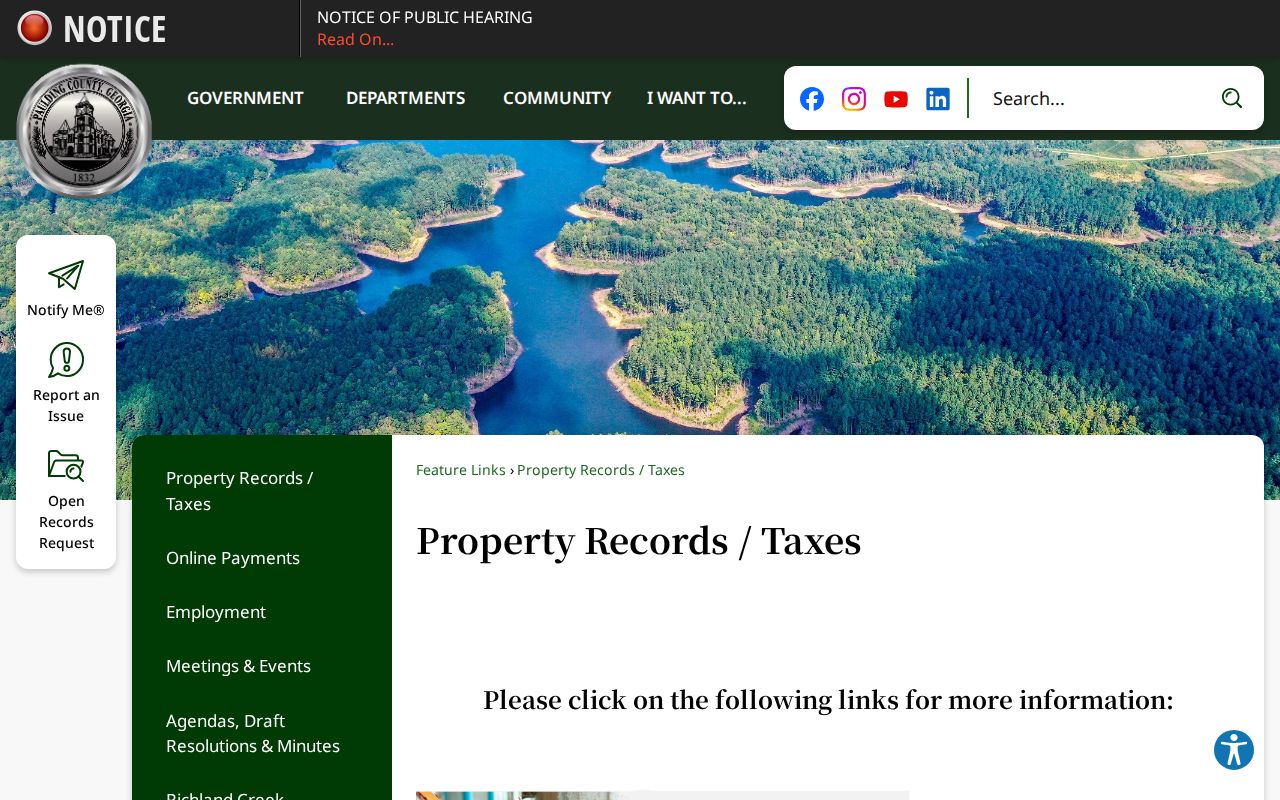
The county gateway divides the labor cleanly. Assessment data pinpoints the parcel and its likely owner. The Clerk's recorded deed confirms the latest grantee. Keep a small source log as you go. Note the access date, the portal or office used, and the parcel key. Record the exact indexed name, the deed reference, and any gap. A "not found" result rarely means no ownership record exists. It can point instead to the wrong county, a name variant, an offline image, or an access failure. Braswell's cross-county geography makes that distinction matter.
Connect a Paulding County Owner to the Right Property File
Confirming the owner is only the first step. Let the question pick the next custodian. The assessor keeps the parcel card, annual value notice, returns, exemptions, and mapping links. The Tax Commissioner holds bill, payment, balance, delinquency, and tax-sale details. The Clerk records deeds, plats, liens, easements, covenants, security instruments, and releases. Zoning and permit files live with Community Development. Municipal land-use records may sit with a city office instead.
One office's name field is not a universal answer. A tax bill can carry the payer. A deed names the grantee. A site plan lists the owner as of filing. That owner may be a former owner today. Easements can benefit or burden a parcel without conveying the whole tract. Date every owner confirmation beside the records that follow it.
Estates add a wrinkle. Paulding Probate Court may show an executor's or administrator's authority. Yet the land transfer still needs a recorded instrument. LLC ownership points the other way. A Secretary of State record distinguishes the legal entity. But it proves nothing about the parcel connection. That source-by-source discipline answers who owns the property. It also preserves what each public record actually establishes.
Know What a Paulding County Ownership Lookup Cannot Prove
An assessor name is not a title opinion. A deed-index hit falls short too, unless its land description matches the parcel. The owner may be an LLC or trust, and the mailing address may sit elsewhere. The person at the property may not hold title. Lawful redactions and protected addresses also appear in public records.
Ownership terms
Owner of record: the name carried on an official roll. Grantee: the party receiving an interest under a deed. Situs means the property's physical address, while the mailing address is where official mail goes. Title covers the legal rights in land. Evaluating it takes far more than an online name lookup.
Lawful use. A Paulding County owner lookup supports purchase diligence, boundary questions, fraud prevention, and estate research. Never use it to stalk, harass, intimidate, or harm anyone.